Reach
Notice the available direction without forcing the final few degrees. A smaller, controlled range can still be valuable information.
Kainos editorial journal · 2026
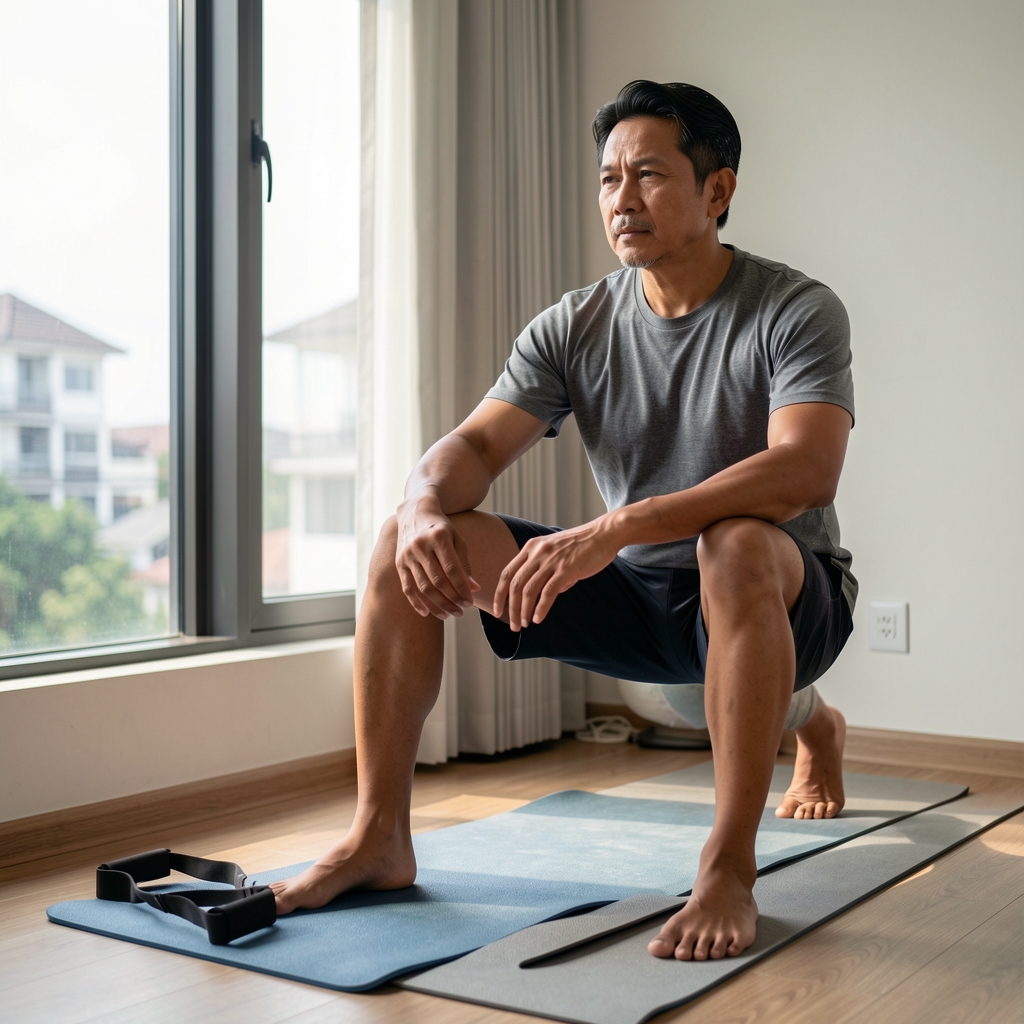
Mobility is more than reaching a position. It includes awareness, control, confidence, and the ability to move through a range that suits the task in front of you.
For men over 35, mobility conversations often sit between training, desk work, travel, and ordinary household movement. A useful practice makes room for those contexts rather than treating flexibility as an isolated target.
Kainos presents mobility as a companion to strength: the aim is to understand how a joint and the surrounding movement pattern behave under manageable demand.
Notice the available direction without forcing the final few degrees. A smaller, controlled range can still be valuable information.
Move slowly enough to notice whether the position can be entered and left with consistent coordination.
Relaxed breathing can help distinguish a deliberate movement from a braced or hurried attempt.
| Observation | Useful interpretation | Next question |
|---|---|---|
| Range differs side to side | Movement history or daily habits may differ. | Can both sides be explored gently and consistently? |
| Range is available but unstable | Control may be the relevant training conversation. | Can the position be held or exited with balance? |
| Range changes with warm-up | Temperature and attention may influence the task. | What does the change look like across several days? |
| Movement creates concern | The session should be reduced or paused. | Would qualified guidance clarify the situation? |
“Mobility becomes practical when it helps a person choose a movement with more control, not when it becomes a contest for range.”
Kainos coverage is educational and does not assess an individual body or condition.
No. Useful range depends on the task, control, history, and comfort of the person moving.
It can be separate, but many readers find that controlled range becomes more meaningful when paired with gradual strength work.
Short observations across several weeks are more informative than a single before-and-after check.