Observed
Describes what was recorded in the study. It should remain close to the measured result and its stated conditions.
Kainos editorial journal · 2026
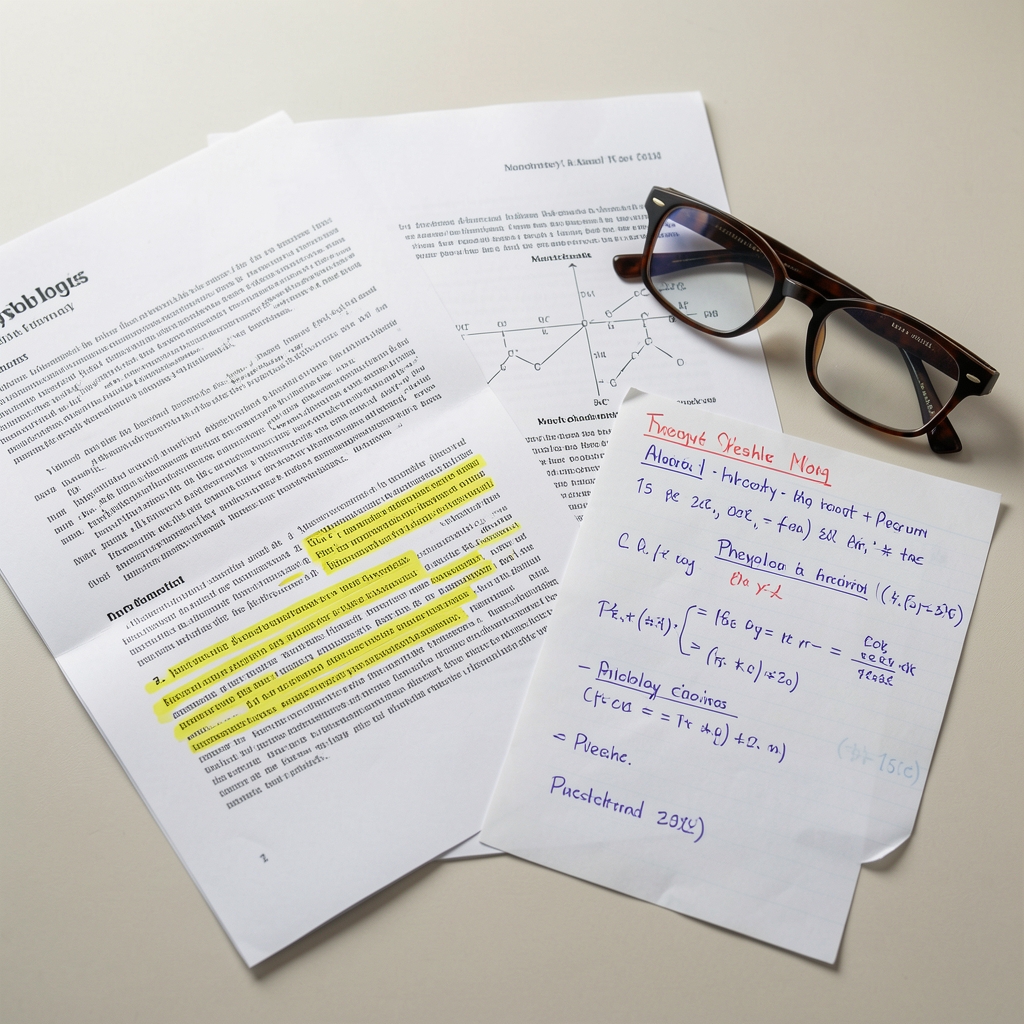
Research notes explain study design, participants, outcomes, and uncertainty so readers can decide how much weight a finding deserves.
A headline compresses a complicated process into a few words. Kainos expands the surrounding detail: who was studied, what was measured, how long the observation lasted, and whether the result can reasonably inform a different setting.
The aim is not to turn every reader into a statistician. It is to make the boundaries of a claim visible before it is applied to a personal training question.
This order protects against treating a single measurement as a complete description of a person or a training method.
| Source feature | Question to ask | Why it matters |
|---|---|---|
| Participants | Who took part and who was excluded? | Population and selection shape how far the finding travels. |
| Comparison | What was the result compared with? | Change needs a meaningful reference point. |
| Outcome | Was the outcome measured directly? | Different outcomes answer different questions. |
| Duration | How long was observation maintained? | Short observations cannot establish long-term patterns. |
| Limitations | What did the authors identify as uncertain? | Limitations prevent overconfident interpretation. |
Describes what was recorded in the study. It should remain close to the measured result and its stated conditions.
Indicates that two things appeared together without automatically showing that one caused the other.
Explains what the authors or editors think the pattern may mean, while keeping the uncertainty visible.
“A careful source does not remove uncertainty. It tells you where uncertainty begins.”
Kainos uses this principle when summarising public research and welcomes corrections that improve a source trail.
Usually not by itself. A paper contributes one piece of evidence, and its relevance depends on method, population, outcome, and consistency with other work.
Limitations help a reader understand the conditions around a result. They are part of the finding, not an administrative footnote.
Yes. Send the article link and the passage in question through contact.php. The desk aims to acknowledge correspondence within seven business days.